Dave Ross wrote to tell me about his print and play game Euronimoes, which is in its third and final edition (hasn't required any updates in 4 years).
Print and play games are great for time when you are stuck at home, because they: are craft projects (sometimes minimally), free, and usually light, simple, and family-oriented.
Euronimoes fits the bill, as a Euro-style pattern building game, which requires only one or two sets of Dominoes (0-6) and a few poker chips for each player, and the free rules from his site.
On each turn, you take a Domino into your hand, either from a "market" or the draw pile, and then play one from your hand into your personal pattern space (see the above figure, for example). Dominoes in the market cost -1 (you gain a chip) up to 3 chips, while taking a random Domino always gives you 1 chip.
Columns in your space must always form runs up or down (if touching), and you score the lowest tile in each run; lowest score in the end wins. There is also an option to build upwards and take off more points from your score.
That's about it; details are in the free rules.
Tuesday, April 21, 2020
Codenames Online
We have been playing Codenames remotely with family and friends at https://www.horsepaste.com/ .
The spymasters view the board with the relevant words highlighted, which is actually easier than looking back and forth at a mapping card. The other players click on a box when they want to guess a word.
You need some other means of communicating open at the same time, as you play.
There are some other sites that also have working versions of the game, none of them official. The site of the game publishers https://codenamesgame.com/ indicates that they are working on providing an official version of the game.
Sunday, March 29, 2020
Board Games in the Time of Corona
If you are lucky (?) enough to be stuck at home with other people, and they are willing, then board games are a good way to connect, if the rest of the time everyone is on their own electronic devices (as it is in my house).
Game nights and game day is out of the question, but nearly every game we might want to play, including Tichu, has a free online version, some with better interfaces, and some with worse. Check them out before inviting others to play, and then use your usual game group communication platform to organize session times.
I tried playing Codenames via Zoom (I didn't know about the online version at the time). This did not work well for me, since there was an issue with focusing our camera on the board and with lag times between the various video participants. If you have less lag time in your area, you may experience better results.
Yehuda
Game nights and game day is out of the question, but nearly every game we might want to play, including Tichu, has a free online version, some with better interfaces, and some with worse. Check them out before inviting others to play, and then use your usual game group communication platform to organize session times.
I tried playing Codenames via Zoom (I didn't know about the online version at the time). This did not work well for me, since there was an issue with focusing our camera on the board and with lag times between the various video participants. If you have less lag time in your area, you may experience better results.
Yehuda
Thursday, March 26, 2020
5 Awesome Online Games You Must Try
The following is a guest post.
There are many games online, ranging from good to bad and therefore fun and not fun. But there are games that stand above the rest. Games that have people coming back for years or even decades. Games that are so fun that they’re considered classics.
Not that you shouldn’t explore yourself on what games to play, but, if that task seems too daunting or you need a place to start, this is it. Chances are you’ve heard of most if not all of the following games, and there’s a good reason for that. They’re fun. Many people believe such and therefore it is likely that you will also think so.
Many games are considered classics and if you’re ever bored or unsure of what to play, then classics should be a goto. If you don’t know what classics to refer to then look no further for the classics that you seek include solitaire, jigsaw puzzles, sudoku, mahjong, and crosswords; while these apply in real life as well, this refers to online for infinite play.
Solitaire
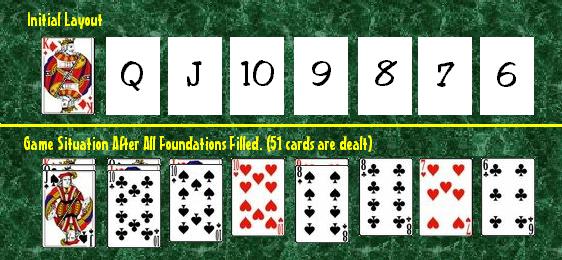
As the above may suggest, the first game you must try is online solitaire. Solitaire is a game of multiple names, two of which being, Patience, or card solitaire. In general, solitaire is a term used for single-player games of concentration and skill involving a set layout of a certain item, which could be tiles, cards, stones, etc. Which is why it can be called card solitaire.
Each game of solitaire acts as a puzzle, every card is laid out in a specific position so as to randomize each solution, which could be in your favor, or not. As said, each card is laid out specifically in a layout, to solve the puzzle you have to sort the cards and conform to the specific rules of the game, whichever it may be. It’s a fun puzzle game that is certainly satisfying to beat.
Jigsaw Puzzles
There’s a very high chance that if you know any game on this list, it’s actual jigsaw puzzles. And if you do know about them then you probably also know that to play jigsaw puzzles you had to buy the different sets and couldn’t do other images unless you bought that specific set, well, no more. The era of online fixes that issue.
Thanks to it being online you can do puzzles with any website given image, some even let you choose your own image as well as your difficulty. If achieving a certain goal and also being able to see it right before your eyes is something you desire, then jigsaw is your best bet. Truly a game that will never disappear, and therefore, you should play it.
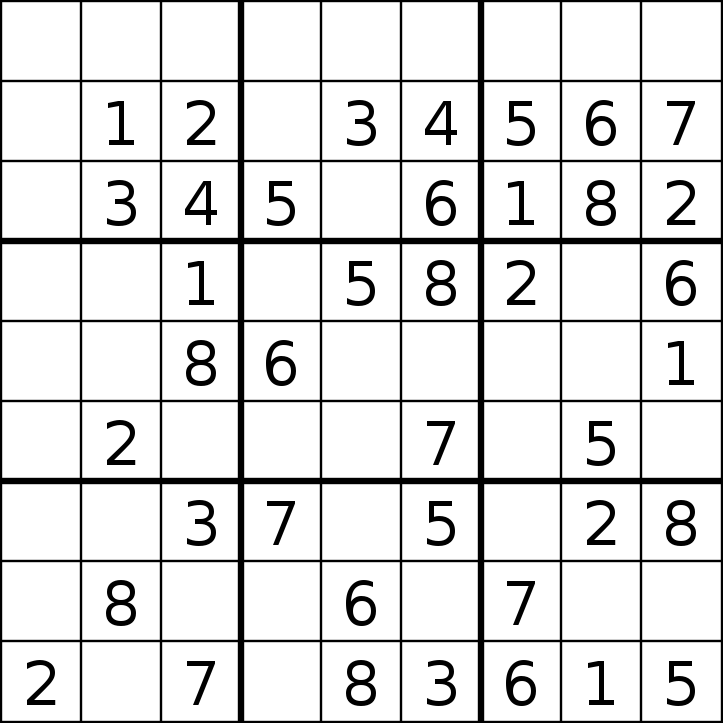
You complete the puzzle by having every box within the puzzles filled in with a number. This seems easy at first since you might just be thinking you can repeat numbers, but that’s where the rules come in. In each square there can only be a singular number of 1-9, this also applies to rows and columns, no number can repeat vertically, horizontally, or… boxically.
For a game that contains many numbers, you don’t actually need to know any math so don’t let that frighten you. Sudoku is a game loved by many for many years ever since it was popularized in the late 1980s.

Each player is given 12 tiles, with each turn the players can draw or discard tiles until they have completed a legal hand using the 14th drawn tile to form melds also known as sets as well as a pair, which is known as an eye. The game can also be won with special sets. Which this being online, there should be no shortage of opponents which can include A.I.
Crosswords
A need to play by any sense of the word, crosswords are word puzzles and word search games that take place within a square. The goal of the game is to form words or phrases using the white boxes based on sentences, references, or clues given which pertain to a certain square number. The clues and such are also labeled as being either vertical or horizontal.
The square also contains black or shaded areas that are meant to separate boxes which essentially separate words to make it easier to distinguish the correct answer. The way to complete the puzzle if by filling in each set of boxes with the correct word or phrases. The bonus with this being online is there there will be no shortage of crosswords or topics to choose from.

To recap, what you must play include solitaire, the card game, jigsaw puzzles, the puzzle piece game, sudoku, the number placement game, mahjong, the tile game, and finally crosswords which is essentially the word placement game. Each of these games is beloved by many and definitely should be a place to start or go if you’re ever wondering what to play.
There are many games online, ranging from good to bad and therefore fun and not fun. But there are games that stand above the rest. Games that have people coming back for years or even decades. Games that are so fun that they’re considered classics.
Not that you shouldn’t explore yourself on what games to play, but, if that task seems too daunting or you need a place to start, this is it. Chances are you’ve heard of most if not all of the following games, and there’s a good reason for that. They’re fun. Many people believe such and therefore it is likely that you will also think so.
Many games are considered classics and if you’re ever bored or unsure of what to play, then classics should be a goto. If you don’t know what classics to refer to then look no further for the classics that you seek include solitaire, jigsaw puzzles, sudoku, mahjong, and crosswords; while these apply in real life as well, this refers to online for infinite play.
Solitaire
As the above may suggest, the first game you must try is online solitaire. Solitaire is a game of multiple names, two of which being, Patience, or card solitaire. In general, solitaire is a term used for single-player games of concentration and skill involving a set layout of a certain item, which could be tiles, cards, stones, etc. Which is why it can be called card solitaire.
Each game of solitaire acts as a puzzle, every card is laid out in a specific position so as to randomize each solution, which could be in your favor, or not. As said, each card is laid out specifically in a layout, to solve the puzzle you have to sort the cards and conform to the specific rules of the game, whichever it may be. It’s a fun puzzle game that is certainly satisfying to beat.
Jigsaw Puzzles
There’s a very high chance that if you know any game on this list, it’s actual jigsaw puzzles. And if you do know about them then you probably also know that to play jigsaw puzzles you had to buy the different sets and couldn’t do other images unless you bought that specific set, well, no more. The era of online fixes that issue.
Thanks to it being online you can do puzzles with any website given image, some even let you choose your own image as well as your difficulty. If achieving a certain goal and also being able to see it right before your eyes is something you desire, then jigsaw is your best bet. Truly a game that will never disappear, and therefore, you should play it.
Sudoku
The game that used to be known as Number Place is as the original name would entail. You are given a grid of 3x3 squares and within those squares, there are 3x3 other squares (boxes). In each square, there is a given amount of numbers within those boxes and the empty boxes are the ones you insert puzzles to complete the square.You complete the puzzle by having every box within the puzzles filled in with a number. This seems easy at first since you might just be thinking you can repeat numbers, but that’s where the rules come in. In each square there can only be a singular number of 1-9, this also applies to rows and columns, no number can repeat vertically, horizontally, or… boxically.
For a game that contains many numbers, you don’t actually need to know any math so don’t let that frighten you. Sudoku is a game loved by many for many years ever since it was popularized in the late 1980s.
Mahjong
A game that was developed in China during the Qing dynasty, Mahjong, is a popular game to this day worldwide. Mahjong is a game of tiles that involves skill, strategy, and just a bit of luck. Commonly the game is played with four people but there are variants for three. The game is set with 144 tiles with Chinese characters and symbols being written on them.Each player is given 12 tiles, with each turn the players can draw or discard tiles until they have completed a legal hand using the 14th drawn tile to form melds also known as sets as well as a pair, which is known as an eye. The game can also be won with special sets. Which this being online, there should be no shortage of opponents which can include A.I.
Crosswords
A need to play by any sense of the word, crosswords are word puzzles and word search games that take place within a square. The goal of the game is to form words or phrases using the white boxes based on sentences, references, or clues given which pertain to a certain square number. The clues and such are also labeled as being either vertical or horizontal.
The square also contains black or shaded areas that are meant to separate boxes which essentially separate words to make it easier to distinguish the correct answer. The way to complete the puzzle if by filling in each set of boxes with the correct word or phrases. The bonus with this being online is there there will be no shortage of crosswords or topics to choose from.
Must-Play Games
As previously said, there are many games out there both in the real world and online. With online, however, there’s no shortage of anything for any of these games which means that you can endlessly play without worrying about paywalls; paywalls being the requirement to buy more sets of puzzles to enjoy said puzzle.To recap, what you must play include solitaire, the card game, jigsaw puzzles, the puzzle piece game, sudoku, the number placement game, mahjong, the tile game, and finally crosswords which is essentially the word placement game. Each of these games is beloved by many and definitely should be a place to start or go if you’re ever wondering what to play.
Monday, December 09, 2019
The Case of Turner Prize: Are Too Many Ties Devaluing the Concept of Competition?
CNN reports on the winners of this year's Turner Prize, an annual prize presented to a British visual artist. All of the finalists asked to be given the prize jointly, as a group, and so all of the contenders "won" in a competition in which no one lost.
This, combined with what some people see as a pattern in recent years, has irked some people. These people see this "tie" and equate it with the concept of spoiled Millennials who get "participation trophies" or prizes for trying. What has happened to cutthroat competition and actual winning.
The Arguments For and Against
The arguments against the Turner prize tie, in this case, are that the refusal to announce a single winner is indicative of snowflakes, who can't handle being losers. That too many winners devalues the concept of winning, and of competition in general. And that it lacks drama.
The arguments in favor are rather specific to this event. The artists decided that their works were complementary, rather than competitive, and did not feel that a competition was the right way to judge them. That felt that they had already "won" by having reached the shortlist for the prize. Alex Farquharson, the director of the Tate Britain gallery which organizes the prize, argues that times have changed and that competition may not be the right format to judge these kinds of works, anymore. Andrew Russeth, a writer for the Daily Mail, writes "This notion of having artists compete in public and one walk away the winner feels a little demeaning and unpleasant."
Some Points to Consider
As for the arguments against, it is important to divide up those activities in which competition really brings out the most effort and the best results versus those in which we have stuck absolute competitions because we were too boring or lazy to provide a better framework. The Olympics doesn't have a single winner, because we don't make the downhill skier compete against the figure skater; the disciplines and forms are too different to compare. So maybe, when it comes to art competitions with very loose frameworks, it is silly to compare different kinds of entries in different subjects, and with different intents. Maybe the Turner Prize is overdue for a restructure.
When it comes to "participation trophies", there are two hands here. On the one hand, participation trophies are not just a Millennial issue; that is lazy, biased journalism, and the usual "look down at the next generation" attitude of Boomers who have suddenly publicized a concept that has existed for generations. Everyone who joins the army (and doesn't screw up too badly) gets stripes and awards during and after service. Everyone who shows up for work gets paid, and often gets bonuses, even if they aren't the number one worker. Even the specific concept of participation trophies is a century old.
On the other hand, participation trophies are not "everyone gets a trophy". They are, unless severely mishandled, a reward for having put in effort. In the same event, different people, i.e. winners, get specific prizes, while everyone who at least put in effort gets the participation trophy. The recipients of these trophies are not morons, and they know that trophies for winning and trophies for participation have different values. But studies show that encouraging effort is better motivation than acknowledging talent. When you tell someone they have won, they stop trying; when you tell someone that they are smart, they often find a way to not be, act, or appear smart. When you tell someone that you see their hard work and you think it is worthwhile, they may end up trying harder, and, sometimes, they may eventually win or get smarter.
However, announcing the Turner Prize as a tie is lazy; if you set up a competition, you should not change the rules in the middle when you realize that the competition was the wrong format. They should have, originally, defined better categories that were more conductive to direct competition, or they should have defined goals for which prizes could be given to all, or a list, of people who met these goals. But, since they didn't, they should have awarded a winner and let the artists figure out how to deal with this.
Competition is not inherently evil. It brings out efforts and results that would not happen without it. When mishandled, it can bring out people too focused on the goal; they might even short circuit the permitted methods to get to that goal. Winning, when handled well, can be a goal or a stepping stone to more effort. Losing, when handled well, is not something to be afraid of. Competition against others should always be, in parallel, competition against ourselves. And for that, a job well done results in a self-award that does not require any external acknowledgement.
This, combined with what some people see as a pattern in recent years, has irked some people. These people see this "tie" and equate it with the concept of spoiled Millennials who get "participation trophies" or prizes for trying. What has happened to cutthroat competition and actual winning.
The Arguments For and Against
The arguments against the Turner prize tie, in this case, are that the refusal to announce a single winner is indicative of snowflakes, who can't handle being losers. That too many winners devalues the concept of winning, and of competition in general. And that it lacks drama.
The arguments in favor are rather specific to this event. The artists decided that their works were complementary, rather than competitive, and did not feel that a competition was the right way to judge them. That felt that they had already "won" by having reached the shortlist for the prize. Alex Farquharson, the director of the Tate Britain gallery which organizes the prize, argues that times have changed and that competition may not be the right format to judge these kinds of works, anymore. Andrew Russeth, a writer for the Daily Mail, writes "This notion of having artists compete in public and one walk away the winner feels a little demeaning and unpleasant."
Some Points to Consider
As for the arguments against, it is important to divide up those activities in which competition really brings out the most effort and the best results versus those in which we have stuck absolute competitions because we were too boring or lazy to provide a better framework. The Olympics doesn't have a single winner, because we don't make the downhill skier compete against the figure skater; the disciplines and forms are too different to compare. So maybe, when it comes to art competitions with very loose frameworks, it is silly to compare different kinds of entries in different subjects, and with different intents. Maybe the Turner Prize is overdue for a restructure.
When it comes to "participation trophies", there are two hands here. On the one hand, participation trophies are not just a Millennial issue; that is lazy, biased journalism, and the usual "look down at the next generation" attitude of Boomers who have suddenly publicized a concept that has existed for generations. Everyone who joins the army (and doesn't screw up too badly) gets stripes and awards during and after service. Everyone who shows up for work gets paid, and often gets bonuses, even if they aren't the number one worker. Even the specific concept of participation trophies is a century old.
On the other hand, participation trophies are not "everyone gets a trophy". They are, unless severely mishandled, a reward for having put in effort. In the same event, different people, i.e. winners, get specific prizes, while everyone who at least put in effort gets the participation trophy. The recipients of these trophies are not morons, and they know that trophies for winning and trophies for participation have different values. But studies show that encouraging effort is better motivation than acknowledging talent. When you tell someone they have won, they stop trying; when you tell someone that they are smart, they often find a way to not be, act, or appear smart. When you tell someone that you see their hard work and you think it is worthwhile, they may end up trying harder, and, sometimes, they may eventually win or get smarter.
However, announcing the Turner Prize as a tie is lazy; if you set up a competition, you should not change the rules in the middle when you realize that the competition was the wrong format. They should have, originally, defined better categories that were more conductive to direct competition, or they should have defined goals for which prizes could be given to all, or a list, of people who met these goals. But, since they didn't, they should have awarded a winner and let the artists figure out how to deal with this.
Competition is not inherently evil. It brings out efforts and results that would not happen without it. When mishandled, it can bring out people too focused on the goal; they might even short circuit the permitted methods to get to that goal. Winning, when handled well, can be a goal or a stepping stone to more effort. Losing, when handled well, is not something to be afraid of. Competition against others should always be, in parallel, competition against ourselves. And for that, a job well done results in a self-award that does not require any external acknowledgement.
Wednesday, November 20, 2019
Comparing All Four Versions of A Star is Born
There are four movies called A Star is Born, all roughly following the same plot (here be spoilers):
An aging, alcoholic, male entertainer is just beginning to exceed the tolerance people allow him for his talent with the ridicule and distress he engenders with his destructive, obnoxious antics. Just at this time, he hears or sees a young woman with talent languishing in a small-time position and takes it upon himself to short-list her into fame and fortune. She initially resists, but falls for him and takes the opportunity. She becomes absorbed into the soulless hit-making factory of Hollywood and becomes wildly successful,, while the world turns away from him. They marry and move in together. He runs out of opportunities and people call him a has-been, in so many words; he even ends up taking phone calls or interview requests for her from people who don't even know him. She wins an award (Oscar or Grammy) and he shows up late to the ceremony and interrupts her speech with some kind of drunken scandalous antic. She asks her manager to give him some pity opportunities; he turns them down. She resolves (more or less) to quit the business in order to live a smaller life with him, since she realizes that he can't handle the situation as is (with her being successful and him not), but he discovers this and decides to kill himself in order to prevent this. She spends some time in self-pity. In the end, she publicly performs or says something to acknowledge his importance to her.
1937: Leads are Esther Victoria Blodgett aka Vivki Lester (Janet Gaynor) and Norman Maine (Fredric March). This is a fine film, although very much a period piece of the time it was made, so there are some rushed dialog, odd pauses, harsh sound, and bad lighting. The plot is well-paced and scripted. The actors are both likeable. The main actors recite some of their speeches woodenly but passionately at the camera (or just off to the left) and there are some hysterics. Everyone else talks like a 1930s gangster.
In this version, the main characters are actors. Esther starts on a farm and travels to Hollywood but meets rejection. Norman gets her into his pictures when he sees her waitressing. Someone directly and quite rudely tells Norman that he is washed up. Norman punches him, so Vicki has to bail Norman out of the police station. Norman overhears Vicki planning to give up her career, so Norman walks into the ocean Vicki ends the movie by looking at the camera and calling herself Mrs. Norman Maine.
This is a fine and memorable movie, worthy of being redone.
1954: 17 years later. Esther Blodgett aka Vicki Lester (Judy Garland) and Norman Maine (James Mason). In this version, the main characters are actors / vaudeville performers singes and dancers. Norman finds Esther singing in a nightclub. The movie is punctuated with several musical performances that, I suppose, were entertaining to audiences of the 1950s. Anyway, they look a lot like bad musicals from that era, like the Road movies and so forth.
I have a hard time conveying the contempt I have for this film. It's mostly in two parts.
Firstly, the acting is always fairly terrible, but sometimes it rises to the level of horrifically terrible. The actors stare at the screen in horror with long pauses, bite their knuckles, fling themselves onto furniture, and weep or shout like idiots.
But mostly, James Mason's Norman grabs, yanks, hurls, pushes, interrupts, orders, and otherwise abuses Judy Garland's Esther throughout the whole movie, yet the movie conveys this as rough but charming. It's sickening. By the time she falls in love with Norman, he has done nothing but pull her through doors, push her into cars and rooms, and otherwise abuse her, but all she can think of is how he takes her breath away (duh, by never letting her think or talk). Most of the abuse comes from Norman, but some of it comes from other people, too. She is a rag doll. It's jaw-droppingly painful to watch. The very little agency she has in the film is to sing and dance, or to wail and cry over how sad it is that she can't do anything for Norman ("She can't! She can't! She can't! Ohhhhh aaahhhh aaahhhh!")
Norman overhears the fateful conversation and is (overacting) horrified and drowns himself. After getting yelled out and yanked by a few more people, Vicki ends the movie by looking at the camera and calling herself Mrs. Norman Maine. And then ...
1976: 22 years later. Esther Hoffman (Barbra Streisand) and John Norman Howard (Kris Kristofferson). This movie is thankfully a step up from the previous one. It's diverges a bit from the others as to how it fills in the plot scenes. The main characters are now singers. The movie starts with a big crowd and drunken stage performance.
They took the main outline of the plot and decided that everyone already knows it, so the movie is about 50% plot and 50% Barbra and Kris being playful and making love. It's very 1970s, not only the hair styles and crowd scenes, motorcycle and car driving, but with the casual flashes of nudity and almost relaxed attitude toward infidelity (it's an insult, but apparently an easily forgivable one). And now we have cocaine, not just alcohol.
The result is somewhat loosely plotted and kind of boring. We skip all the scenes of how she turns into a star (she just does, in a 2 minute montage), we skip her changing her name (she pooh-poohs that idea after being asked by a reporter), we skip the courtroom bailout scene, and we skip most of the conversation that is supposed to lead to his death. She yells at him once for sleeping around, saying that she doesn't want him to drag her down, and he races off into the desert and dies (whether by accident or deliberately is left a bit vague). She ends the movie by singling another song, no name assertion.
It's not only that neither of the main characters are likeable. It's that they don't have much in the way of character to like or to not like. John is kind of sympathetic. Esther is kind of ... well, she's just Barbra Streisand.
But Barbra can sing, and she sings fine. So fine that you kind of wonder how it is that she was languishing in obscurity to begin with.
This is not worth watching, but the soundtrack is lovely. And then ...
2018: 38 years later. Ally (Lady Gaga) and Jackson Maine (Bradley Cooper). The main characters are singers. The movie starts pretty similarly to the 1973 one (with better camera-work and sound), but the alcoholism is more subtle.
This one is, by far, the best one, with incredible performances, scripting, directing, and shooting. The music is amazing, and Lady Gaga is a great singer (okay, Barbra was better, but that's a given for just about anyone). Possibly the only issue I have is the rushed scenes leading up to his decision to kill himself. Ally only half-heartedly tries to throw Jackson some pity-bones (she says one quick sentence about not go on tour without him). The scene that struck me as most wrong was that someone flat out says to Jackson that he is a drag on her career and should disappear, rather than him overhearing it (like he does in the first two movies). It's not that this couldn't or wouldn't happen, it's just a less sympathetic way to depict it happening.
Jackson hangs himself instead of drowning. And Ally ends by introducing herself as Ally Maine, and then she sings a final song while she looks directly into the camera.
Bradley and Lady, as well as everyone else, do a great job of pacing and acting. They are likeable and tragic. The songs are pretty great, too. And the story is, apparently, timeless.
Monday, November 18, 2019
2019 Holiday Gift Guide
This guide includes games for young and old, for every gender, generation, temperament, and culture.
Whatever you do, and whatever you celebrate, there is no better way to spend a Christmas, Hanukkah, or what have you than together with friends, family, and neighbors with a warm cup of (fair trade) cocoa and a stack of casual board and/or card games.
Remember that the most valuable gift you can give is time. Don't just give your loved ones a game; play it with them. Find or start a local game group and join or form a community.
I hope you enjoy the guide. Remember: the holidays are not only for sharing the warmth with family and friends, but also for sharing with those who have no one else to share with them. Give to your local shelters, hospitals, and so on, because that's the gift that keeps on giving.
Enjoy,
Yehuda
Whatever you do, and whatever you celebrate, there is no better way to spend a Christmas, Hanukkah, or what have you than together with friends, family, and neighbors with a warm cup of (fair trade) cocoa and a stack of casual board and/or card games.
Remember that the most valuable gift you can give is time. Don't just give your loved ones a game; play it with them. Find or start a local game group and join or form a community.
I hope you enjoy the guide. Remember: the holidays are not only for sharing the warmth with family and friends, but also for sharing with those who have no one else to share with them. Give to your local shelters, hospitals, and so on, because that's the gift that keeps on giving.
| Antike II: Ages 8+, 2 to 6 players Risk is a long game of laying low, with player elimination and just too much in the luck department; this game (and its predecessor but very rare and expensive Antike) is the perfect evolution to, and replacement for, Risk. It plays quicker, there's dice-less conflict, no one gets to lay low watching while others fight, and - excepting truly poor play - everyone has a chance for most of the game. There's also a lot more to the game than just conflict, but the rules are short and elegant. |
|
| Azul is a new game with gorgeous components and simple game play: take all of the tiles of one color from one mat or from the center and try to fit them into the right rows at the right time. Easy enough. The tricky part is scoring rows and columns of connected tiles. This new version, Azul Stained Glass, ups the fun by eliminating a few rules and adding a half dozen additional tactical options without adding much more complexity. Simple to explain and easy to get going, and it looks so nice. |
![]() |
Backgammon: Ages 6+, 2 players Backgammon is a classic game that can be enjoyed by children and parents alike. While there is a large amount of luck in the game, there are also many meaningful decisions, which makes this a good stepping stone to future games with more challenge, such as Checkers or Chess. |
![]() | Boggle: Ages 8+, 2 to 10 players Boggle is a word game, whose simple rules - find all the words you can within three minutes - make it a game that is both fun and quick. Adults can play with kids by restricting the adults to have to find words of four or five letters. The pictured version is a little quieter and less bulky than the old boxy version, and comes with a built-in electronic timer. |
![]() | Carcassonne, variants, and expansions: Ages 10+, 2 to 5 players Carcassonne is a bit more complex than some of the other games here, but the beautiful pieces and the fun game play are worth the time to learn. Pick a piece from the pile, rotate and place it so that it fits on the board (like dominoes), and then optionally place one of your pieces on that tile. There are several ways to score, some of which occur during the game and some of which only at the end of the game. There are some more rules than that, but not too many more. The game play is engaging enough to make you want to play it more than once in a single sitting. There are dozens of versions to the game, and some of the versions have several expansions. |
| Catan: Ages 8+, 3 to 4 players This game, formerly known as The Settlers of Catan, and Ticket to Ride, are the perfect adult games for beginning gamers. All you need to do is collect ten points through building settlements and cities, connecting roads, adding developments and trading with your fellow players. A unique board that changes each time you play, constant interaction even when it's not your turn, and a great balance of luck versus strategy makes this The Game to acquire if you still think that board games are only for kids. |
|
Chess / Xiangqi / Shogi: Ages 6+, 2 players These three games, Chess, XiangQi (Chinese Chess), and Shogi (Japanese Chess), are all top-tier 2-player games that can occupy a curious mind for an entire lifetime. They also have wide followings, so learning the game is learning a language that will admit you to a culture of fellow players around the world. Board and piece prices range from inexpensive to very expensive, and Chess pieces come in many different themes. |
![]() | Chinese Checkers: Ages 6+, 2 to 6 players Another great abstract, and a pretty one if you find one with nice marbles. The rules are simple: move or jump your pieces from one side to the other. Finding chains of jumps is a thrill for all ages. |
| Carrom / Crokinole / Nok-Hockey / Air Hockey / Billiards / Foosball, etc.: Ages 6+, 2 players Carrom is the most played tabletop game in India. Like Billiards, the object is to knock pieces off the table area, which you do by flicking wooden disks with your fingers. I picked up Crokinole a few years ago, and it is a constant hit with my girlfriend, family, and friends. All kinetic tabletop games, from snooker to billiards to foosball, are loved by players of all ages. |
![]() | Cards: Ages 3+, 1 to any number of players Decks of cards, whether they are the well known Western type with 52 cards in 4 suits, or special European or Asian decks, are a great starting point for any number of wonderful games, including Bridge, Hearts, Skat, Cribbage, Pinochle, Oh Hell, Bullsh*t, Durak, President, Spades, Solitaire, and many others. Check out Pagat.com for the rules to these games and to thousands of others. |
| Codenames: Ages 10+, 4-10 players Codenames is a new, fun game that uses words in an unusual way. Two teams, the clue givers alternate trying to give one word clues that match as many of their team's cards as possible. You must find a word that matches multiple other words, but not any of your opponent's words or the assassin's word. It's mindbending, and the game is infinitely replayable. A great game for non-gamers and gamers alike. If you are just two people, try the new two-player version. |
| Dixit: Ages 10+, 3-6 (12) players Dixit is an incredible game, especially for non-gamers. It is loved as a creative exercise: pick a card and give a word, phrase, song, dance, or any other clue to describe it, but not too perfectly. The other players try to play cards that also match your clue. You only get points if some people guess which was your card and some people don't. The fun is in the creativity of the clues, and I've yet to see a game where even the most stodgy non-gamer doesn't have fun. There are now several expansions, which are all good. This game, like many others, was inspired by Apples to Apples, another nifty game for the casual non-gamers who walk among us. |
|
| Frankenstein: Ages 6+, 2 to 4 players A little plug for my own game. This is a simple set-collection auction game with a monster theme. It fits in well with the other games on the list: easy to learn, quick to play, lots of replayability. The theme may not be appropriate for all ages, but most kids today should feel comfortable playing it. Of course, I may be biased, since I designed it. |
![]() | Froggy Boogie: Ages 3-9, 2 to 4 players Froggy Boogie is a brilliant game to frustrate grownups and please younger children. All you have to do is remember where the picture of the fly is, under the left eye or the right eye? The dice have only colors - no counting necessary. It's a perfect first game. |
![]() | Go / Pente: Ages 6+, 2 players Beyond Chess, Checkers, or XiangQi is the absolute perfect game of Go (aka Weiqi); it's so popular, there are twenty-four hour television stations dedicated to it, an anime series based on it, and it's considered one of the four arts of the Chinese scholar. It really is that good, and the rules are easy, too. Best of all, a built-in handicap system allows two people of any skill levels to enjoy a challenging game against each other. You should play with the nicest board you can afford. Pente, a game of getting five stones in a row, can be played on the same board. The rules are just as easy as Go, and while the game has much less depth, it is also a little less intimidating to new players. |
![]() | Jungle Speed: Ages 8+, 3 to 8 players There are several games of speed reaction / pattern recognition on the market; I chose this one because of the components. Players flip cards in turn and grab for the totem in the middle as soon as two matching cards are revealed. Don't play with friends who have sharp nails or finger jewelry. |
| Magic the Gathering: Ages 8+, 2 players After two decades, Magic is still The Bomb when it comes to collectible card games, although Yu-Gi-Oh sells more cards. These are not easy games to learn, but quick start guides can get you off the ground fairly quickly, and then you have months and years of challenging game play ahead of you. Don't get sucked into having to buy endless amounts of boosters; to play the game outside of a tournament, you only need a few hundred common cards which can be picked up for a penny each on various sites. | |
![]() | Mancala: Ages 5+, 2 players This is widely known around the world under various names (e.g. Oware), and the national game of many African countries. The rules are easy: pick up all the seeds in one of your bowls and place one in each bowl around the table. If you land on an empty space on your side, you win the seed and any seeds opposite. There are a few more rules, but that's about it. It takes a few games to get up to speed; early victories tend to be lopsided. Once you get the hang of it, you can play several, quick, challenging games in succession. |
![]() | Memory: Ages 3 to 12, 2 to 5 players This is a first game for kids and adults, and a great game for it, because kids get the hang of it very quickly and adults find it a real challenge without having to pretend. All you need are one or two decks of cards, but an infinite number of these games are sold with various different pictures and themes. You can play with more than 5 players, but I wouldn't recommend it. |
| Nefarious: Ages 8+, 2 to 6 players This is a game of mad scientists that is great for 2 to 6 players, and doesn't sacrifice speed with more players. Each round, you select one of four actions. collect money from any neighbors who selected actions that your minions are invested in, perform your action, and then check to see if you won. The actions are: invest minions, play cards, take cards, or take money. The cards are fun and the game is quick and replayable, because, in each game, you play with some random twists that make that game's experience unique. |
![]() | No Thanks: Ages 7+, 3 to 5 players This is an easy to learn and addictive little card game. A card is flipped up, and you either take the card and any tokens on it or place one of your tokens on it and pass it to the next player. Cards are bad, and tokens are good. But runs of cards only penalize you for the lowest valued card. A simple and fun game. |
| Pandemic / Pandemic Legacy Cooperative games used to be either very boring, very childish, or very hippy. A new breed of cooperative games are nail-bitingly challenging and fun. Pandemic is a cooperative game of saving the world from disease. Other cooperative games include Lord of the Rings, Shadows Over Camelot, and the much simpler Forbidden Island. The new Pandemic Legacy (like Risk Legacy, mentioned above), is a version that plays out: each time you play the world is permanently changed with stickers and torn cards; after dozens of plays, the game is over. |
| Poker: Ages 6+, 2 to any number of players Playing for money is not a good habit, but a nice set of poker chips and some decks of cards is a great way to spend an evening. There are countless poker games, too. | |
![]() | Scrabble: Ages 8+, 2 (or 2 to 4) players. Scrabble purists will tell you that you should only play with 2 players and a Chess clock, but for casual purposes it can be played with up to four. It is The word game, and for a good reason. My favorite way to play is to ditch the board and just play Anagrams: turn over tiles, and first to call a word gets it. A similar, recommended game is Bananagrams, where players race to create their own crossword boards. |
![]() | Set: Ages 6+, 2 to 10 players Those who don't have it won't enjoy it. For those who do, it hits just the right spot in the brain. All you have to do is call out matches when you see them, but the matches have to match or not match in all four characteristics. |
![]() | Stratego: Ages 6 to 15, 2 players By the time I was in my teens, I had outgrown this, but it remains a seminal game for early players, a great introductory war game with all the basic elements: strategy, tactics, and bluffing. Avoid the electronic ones; they break and they're noisy. |
| Splendor: Ages 8+, 2 to 5 players The new game on this list, this is a little resource management game of taking jewels and buying trade routes (i.e. cards). The components and decisions are few and pretty, and there are a few options for strategy, but they are well balanced, making this a tight game every time. Very simple to understand, challenging to win. |
| Sushi Go Party - This is a lighter, friendlier version of a game I dropped from this list (7 Wonders). Sushi Go is a drafting game: everyone has a hand of cards. Pick one to play and pass the rest. Repeat until the game is over. At the end of each round and at the end of the game, score some of your cards based on the combinations you acquired and played during the round(s). The party box gives you enough decks to play thousands of times with different combinations, keeping the challenge ever fresh. 7 Wonders has more complex scoring, busier cards, and an historical theme, but it's pretty much the same concept. |
![]() | Ticket To Ride: Ages 8+, 2 to 5 players Many of my fellow bloggers think that this, rather than Catan, is The Game. I used to disagree, but I think I have come around. New players will find this a great intro game, with lots of choices and great game play. There are several editions of the game, and the 1910 expansion is recommended. |
![]() | Tichu: Ages 8+, 4 players A partnership "ladder" game, similar to the game President (sometimes known by its crude name). It's similar, but the addition of a few special cards, a partnership, and passing elevate this to a perfect game for two couples. This is THE card game in gamer circles, and it's not at all complicated. |
![]() | Time's Up: Ages 8+, 4 to 10 players This consistently ranks as the number one party game on all of my fellow bloggers' lists. It's the number one ranked party game on Board Game Geek. Which says something. It plays a lot like the parlor game Celebrities. |
![]() | Uno: Ages 6 to 12, 2 to 8 players This could be a child's second game, after Memory, and before moving on to real games. There's not much in the way of thinking involved, but its simple rules, portability, and quick play make it an ideal game for younger kids in almost any situation. Just be sure to move up to better games when the kids are ready. |
![]() | Wits and Wagers / Balderdash: Ages 8+, 4+ players These are party trivia games where knowledge of trivia is not so important. The question is asked, and each player writes down an answer. These are revealed and players then bid on the answers they think are best. The winning answer, and the winning bids, all score points. Wits and Wagers does this in the form of a poker game setting, while Balderdash requires you to make up funny possible answers. Both have won awards and acclaim as an order of magnitude better than you-know-which famous trivia game. |
![]() | Zooloretto: Ages 8+, 2 to 5 players Winner of dozens of awards, Zooloretto is a cute game for kids and decent game for adults. Simply take the animals as they are revealed from the deck and try to fit them into your zoo without overcrowding. A few extra rules and some clever mechanisms makes the game enjoyable for all ages. |
Enjoy,
Yehuda
Subscribe to:
Posts (Atom)