Showing posts with label computer games. Show all posts

Sunday, January 23, 2022

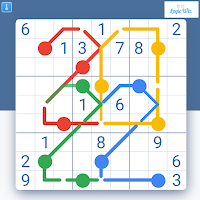
Logic Wiz Sudoku - App to Play Sudoku Variants

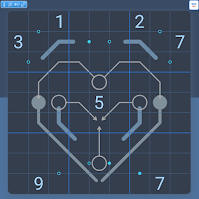
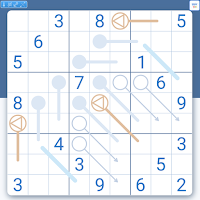
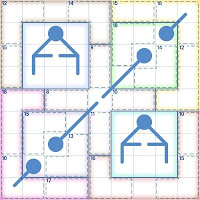
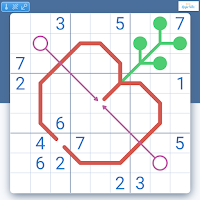
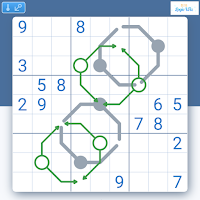
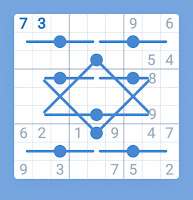
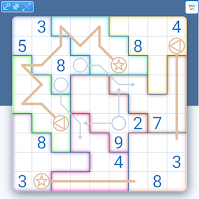
Logic Wiz is an app to play 16 variations of Sudoku (probably more, by now). It was recently developed by Avner and Udi, co-founders of the company Logic Wiz, for Android and iPhone. Most variants and levels are free with ad support, some require payment.

There are other apps that offer Sudoku variants (I have not played any of these), some of which have levels with the same variant ideas found in Logic Wiz. However, Avner and Udi created some original variants, and they created, handcrafted, and implemented all of the boards in each variant. The app works fine and has a nice interface, with visual hints for newbies like me. It comes in multiple languages. Eventually it is supposed to come with leader boards of some kind.

Note: I am not affiliated with them. They sent me a premium-enabled copy to play with.

Friday, October 08, 2021

Holocaust Games

Not everyone shares my objection to Holocaust used as a subject in fictional films, but the concept of a Holocaust game draws near universal confusion and condemnation. This is simple enough to explain: most people understand "game" to mean "toy", "play", or "fun", something they don't think should be associated with the Holocaust. (Yet a film being "entertainment" doesn't bother them, go figure.)

To explain this more fully, consider the objective of a player in such a game. You don't want them to play a victim who dies or is tortured, because, even as an educational tool, that is too intense. You don't want them to play a victim who easily survives, because that is not the lesson of the Holocaust. That's just a revenge fantasy. You don't want them to play a Nazi, for hopefully obvious reasons; and anyway, most fictional portrayals of Nazis complete bury the point of how mundanely clean and rational they behaved. And playing as a gun-shooting liberator, such as an American or Russian, barely conveys anything real about the Holocaust.

That does not exhaust all options, thankfully. You can make question and answer games about the Holocaust; a game based solely on questions probably won't be too much fun (or worse, will be too much fun). You can make small, limited games that, through exploration, teach people about specific events of the Holocaust in passing, such as the deportation of a single town. This allows you to keep the game light enough while lightly educating and, perhaps, stimulating a desire to learn more (supplemental reading material, or links, should be bundled with the game, ideally).

Here are a few games that have tackled the Holocaust. I don't include major franchises that touch on the subject within broader WWII fighting games, such as Call of Duty and Wolfenstein. I don't include games where you take on the role of Nazis. I also don't include games that are designed but not yet published, such as Light in the Darkness.

  • Attentat 1942: This walkthrough game intersperses interviews, animation, footage, and stories by survivors with simple gameplay elements. For example, the survivor might describe how she had to hide paper before the Gestapo arrived, and then you are given the choice of where to hide the papers in the room. You job is to be a historical researcher and learn what happened to your grandfather.
  • Through the Darkest Times: This walkthrough of animated scenes depicts Berlin around the time that Hitler is voted into power until the end of WWII. It's narrative presents how his rise to power included the support of the population. You do various small tasks of resistance, although, of course, the end is the same.
  • My Memory of Us: A video game with a fantasy version of WWII, where two kids who are best friends are separated when an evil king (with robots) comes to power. They impose harsh restrictions on one of the kids (the girl) forcing them to wear certain clothing, mocking them, and creating dangerous situations. They only want to play together, and only by working together can the kids reveal their true power.  The game uses cute graphics against black and white dystopian steampunk backdrops of ghettos, garbage, and barbed wire. The story is narrated by Patrick Stewart.
  • The Journey: A children's based story app from the UK's National Holocaust Centre, about a boy who must navigate Nazi rule in the early 1930s until he gets to Kindertransport. Discover hidden objects and fulfill minor objectives.
  • Witness: Auschwitz: An interactive VR experience about the Holocaust, not actually a game as far as I can tell.
  • Rosenstrasse: A tabletop RPG about the only mass public protest by Germans during the Holocaust: non-Jewish women protested loudly and long enough about their Jewish husbands and successfully obtained the release of these 1,300 men.
    memoiAR, a CMU research team, created an augmented reality version of the game called We Choose Each Other.
  • Train: Brenda Romero's fascinating and controversial thought experiment, which is more of an interactive art piece that can be "played". You have to squish little yellow figures into trains until, at some point, a reveal is made to indicate that you are trying to send Jews to a death camp. At this point, the reactions of participants vary: some keep playing, some quit, some try to subvert the game's goals. While this game has been criticized for whitewashing the complicity of the perpetrators of the Holocaust (who knew what they were doing and volunteered to do it), I think the criticism misses the point about people blinding doing things until they receive a moral wake up call. It's a thought piece, in any case.
  • Charnel Houses of Europe: The Shoah: A supplement for White Wolf's Wrath of Oblivion/World of Darkness RPG. A prime example of what you should not do for a Holocaust game. The book gets some points for seriously describing some of the history and suffering of the Holocaust to people who might otherwise never learn about it. It loses all of these points by weaving in fantasy game elements, statistics for NPCs and campaign settings, and essentially (not intentionally, I'm sure) giving neo-Nazis a platform to roleplay the murder of Jews and other undesirables. Not well thought through.

Cardboard Genocide is a research paper from Poland with some other thoughts on the topic.

Tuesday, July 07, 2020

Black Lives Matter (and Me Too) and Tabletop Games 2

Following up on last month's post about diversity in gaming, here are some additional items from the last few weeks:

- Wizard of the Coast: First, they have responded to the issue regarding inherently evil races in Dungeons and Dragons (such as dark elves) by reviewing and changing future products to enable all members of all races to choose their own morality. See their press release. This may not be enough; game design freelancer Orion D. Black just resigned, claiming that the Wizards press release does not address real issues of racism within the company structure; his statement is here. Second, they have cut ties with Magic artist Noah Bradley, who has long and often been accused of severe sexual harassment, after Noah himself posted a lengthy acknowledgement and apology on the topic.

- Cards Against Humanity: Former employees accused the company and one of its co-founders of a toxic work environment and sexual harassment. The co-founder, Max Temkin, has stepped down. Considering the line of games and materials this company produces, this is no surprise to me. Statement from the company. The workers are now unionizing.

- A huge list of accusations about sexual assault, rape, and harassment was made last month regarding various video game personalities, especially streamers. Video game publishers also must address a long history of racism in games and by players.

Thursday, August 16, 2018

My Memory of Us: A Polish Video Game About the Ghettos

My Memory of Us is a game developed by Juggler Games and soon to be published by IMGN.PRO, both of them Polish companies.


The game is set in a fantasy version of WWII, where two kids who are best friends are separated when an evil king (with robots) comes to power. They impose harsh restrictions on one of the kids (the girl) forcing them to wear certain clothing, mocking them, and creating dangerous situations. They only want to play together, and only by working together can the kids reveal their true power.

The game uses cute graphics against black and white dystopian steampunk backdrops of ghettos, garbage, and barbed wire. The story is narrated by Patrick Stewart.


I'm happy that they are not directly using Holocaust imagery, since this tends to end up in the hands of Nazis who enjoy watching Jews lose the game (like they enjoy watching Holocaust movies and rooting for the bad guys).

I don't know exactly how the story plays out. It might be an apologetic for Poland: the main characters are obviously the bad German regime and the two kids, Polish and Jewish, who work together and are both victims. Or it might not. You could gloss over that and simply enjoy the game. Apparently, the game was inspired by the real lives of some of the developers.

HT: Engadget via Boing Boing

Monday, December 08, 2014

Lume and Lumino City: Video Games Made of Paper, Cardboard, Motors, and Lights

Lumino City is a video game made from videos shot of handmade paper-craft, cards, lights, and motors. It took three years to construct and is the sequel to 2012's equally artistic and intriguing Lume.


What do we call a game that plays like a video game, but it made out of physical objects in the way that board games are made? Obviously they are video games. But they are something else, the same way that The Dragon's Lair was a video game but also a choose-your-own adventure movie.

Come to think of it, what do we call a board game made from computer graphics, like what we play on an iPad? Obviously they are board games. But they are something else, especially when the game adds a little something extra that is hard to reproduce in the board game equivalent, like animated piece movement.

So often we see copies of the most obvious products that our tools can produce. Artists use tools to create new things. The Lume series is art: not because the paper-craft or constructions are art (though they are), not because the game-play is art, but because the combined experience opens up new worlds, makes us think differently, and speaks to us about what it means to create. And it's awesome.

This is not the first video game created from non-computer graphics media. For example, The Neverhood is a 1996 game made from (crude) claymation.


This year also brought us Crafty Arcade's iPollute ...


... as well as The Dream Machine.


Yehuda

Thursday, August 28, 2014

Love and Kudos for Anita Sarkeesian

Like Kathy Sierra, Anita Sarkeesian is a phenomenal voice helping to push the world out of chaos and into a brighter future. Kathy wrote the blog Creating Passionate Users, a captivating and inspirational blog about making your products and services - and customer - awesome. Anita records femministfrequency, video blogs about the wide-spread sexism and objectification of women in the media, especially in video games.

Both Kathy and Anita happen to be women. Seven years ago Kathy was driven out of the public sphere by credible violent and sexual threats by the male misogynist low-life miscreants who troll the internet. Now the same is happening to Anita. Don't let the seven years between these events fool you; this kind of thing is happening over and over to other women (and their occasional male defenders) on the same or smaller scales.

It is a rude reminder that the civilized among us live in a world that is surrounded by the far-less civilized. Whether it is Islamic fundamentalists raging through the Middle East cutting of heads, bands of robbers raping their way through Africa, gangs in Italy or California, drug peddlers in Mexico or Columbia, or the racist, sexist, anti-semitic trollers hiding in anonymity in middle America, these are people who are certain that they are better than you and that you have no right to be free from whatever violent actions, threats, and sexual or physical abuse that they choose to direct your way.

The rest of us must remember that, regardless of how liberal or tolerant we are, there are people who are not who will truly not "live and let live". They must be vigilantly and repeatedly condemned at the least, and legally and physically fought when necessary.

Anita's videos are fantastic, of course. Regardless of whether you agree with every point or every example, her contributions to the understanding of tropes in the media is excellent and she should be applauded or intellectually engaged with, not threatened, nor should she or her family be physically or sexually threatened. Like every truth-speaker, the fact that her analysis reveals a systemic problem with the status quo, and results in a violent reaction of those who want it to stay that way and who  pour their filth and hate onto others, is proof that she and others like her are nailing it and must ever-vigilantly continue to do so.

Sunday, June 22, 2014

Save or Enslave the World: Takeaways from #gsummit 2014, the Gamification Conference

GSummit SF 2014 was a gamification conference organized and run by Gabe Zicherman and his cohorts at Dopamine, gamification.co, and Livecube.

Why I Went

I went to the conference to a) understand the disconnect between what the theorists write, what gamification companies present, and what real companies implement, and b) find out what I could contribute to the gamification world, either as a writer, an employee, or a consultant.

Gamification companies present basic, or even bad, game mechanics as implementation examples and in their turnkey products. Often there is no relation between their implementations and the motivational psychology that they espouse. The papers, articles, websites, case studies, and books on gamification present some good information about psychology and motivation, but they present gamification systems with only basic game mechanics. Simply adding points, badges, missions, and leaderboards to a process doesn't make a good game, let alone a more motivational process. Some case studies mention more complex mechanics but leave out the complex implementation details.

A small number of gamification critics who present more comprehensive motivation models are entering the gamification business. Their gamification implementations are allegedly constructed to match their motivational principles, but these implementations still lack the rich potential of complex game mechanics developed in the last forty years. Their systems are still built around an endless parade of points, badges, missions, and leaderboards abstracted from games like World of Warcraft, Farmville, and Second Life. This is akin to watching publisher after publisher espouse the rich potential of board games and then release an endless stream of games based on Monopoly and Trivial Pursuit.

What I Found (Overview)

The con was held in downtown San Francisco in a sketchy, treeless neighborhood that hosts Zynga and other trendy companies in posh buildings half a block from drug dealers and the ramshackle homeless. I estimate that around 300 people attended. Except for some audio problems, it went smoothly.

Every company with a remote connection to any definition of gamification thinks that theirs is the only correct one: they define what gamification is, they present an implementation that conforms to the definition, and then they mention case studies that have little to do with their definition. Companies that promote straight gamification were present together with those who promote play gamification, each one presenting evidence that the other ones didn't know what they were talking about.

When you carefully look at the numbers presented by these companies, few point to a challenge that was properly defined and solved using gamification. They throw out percentage increases in a metric that has little to do with the actual problem. For instance, they might say that a particular system was used by 98% of a group of people. Were these people forced to use the system? What was the net effect in those participants compared to those who didn't use the system? What was the net ROI for the company or the participants? Also, they don't present the implementations that didn't work.

Researchers on standard motivational theory, as well as companies that had nothing to do with gamification, such as purveyors of rewards, gift cards, and loyalty programs, were there. The new gamification companies presented evidence that old-school methodologies don’t work or never worked, while the old loyalty companies trotted out case studies and evidence proving that they work perfectly.

Loyalty programs, customer management, data collection, location tracking, rewards, and manipulation techniques are black hat motivation techniques (getting consumers to do what you want, or playing on consumers’ fears) and these sessions were depressing. Many sessions were sales pitches for services or books; their claims and evidence presented were directly contradictory: loyalty programs worked; loyalty programs didn't work. Don’t design for games or fun, design for engagement; you can’t design for engagement without games and fun. Rewards work amazingly well; rewards actually demotivate.

Sessions from companies or organizations that had implemented systems (straight gamification, play gamification, gameful design, or playification) described how they achieved buy-in from their organization, what were the results, and what they plan to do next. These sessions were the most helpful; they tended to be more honest than the vendors who sell gamification platforms, and in some cases they described the implementations that didn't work.

What I Heard (Details)

Rather than present the contents of each session, I will present what I learned by topic [with my comments].

Motivation

While gamification tokens (points, etc) are extrinsic “rewards” awarded after completing a task, an argument was presented that gamification increases intrinsic motivation by orienting you to do tasks that you will find rewarding. Some said that there is no fine line between the two, and most motivation is a complex combination of both intrinsic and extrinsic rewards.

Intrinsic motivation can trump rewards or threats of punishment. For example, if you are threatened about submitting a report late, you might still submit it late because you want it to be just right. Threats (an external demotivator) actually increase intrinsic motivation that can remain after the threat is removed.

One robust theory on motivation (Octalysis) includes eight parameters: 1) meaning (purpose), 2) accomplishment (mastery, competence), 3) empowerment (autonomy), 4) ownership (acquisition), 5) social influence (relatedness), 6) scarcity (limited awards, rankings), 7) unpredictability (random awards, exploration), and 8) avoidance (loss, opportunity cost). Some of these parameters are extrinsic and some are intrinsic; some are white hat (positive) and some are black hat (negative).

As the ease of performing a task increases, the required motivation to do it decreases. If a trigger to do a task falls under this curve, the act is not performed; above the curve, the act is performed. In any case, a trigger is needed (you may be motivated and able to exercise but forget to set your alarm). Every action is measured independently: the same action may require more or less motivation as it becomes easier or harder (or the motivation changes in some way). So you have to decide between managing the motivation, making the task easier, or providing a trigger.

The methods you use should depend on whether you want the task done once, over a period of time, or long term, and whether you are asking the person to perform a new action, repeat an action done before, change an action, do an action less, or stop doing an action.

Different gamification techniques are more effective at different points; this makes sense due to flow theory. Points are easy to acquire, so they are short term; reputation is more challenging to acquire, so it is long term, and it is also harder to game. Ramp up the processes and switch people to long term focused systems as they gain familiarity.

Happiness is short term and transient. Purpose, which may include short term unhappiness (struggle, challenge), is long term and sustained. The chemicals dopamine, oxytocin, serotonin, and endorphin make us happy, but they each have a different trigger. Dopamine: anticipating rewards. Oxytocin: bonding socially. Serotonin: feeling pride.

There are different types of fun, including hard fun (challenges), easy fun (exploration), people fun (social), and serious fun (purpose). [This correlates – kind of – to Bartle's four gamer types.]

A special note about Rajat Paharia on BunchBalls' philosophy: there is no place for game deign or fun in gamification; it is all about engagement. His philosophy makes zero sense [it's engaging because it is fun and designed well!], but it's (I hope) mostly a matter of terminology and the fact that he presents his product as black hat gamification. Several companies are using BunchBall's turnkey system.

Black Hat Motivation

Rewards: A big prize (like the XPrize) focuses effort and legitimizes the time spent working towards that goal. It motivates disparate teams to accomplish things outside of companies. The cash value, above a certain amount, is not relevant, since the research results, interesting nature of the challenge, and community built during the process is rewarding to the participants. This allows you to get people to do more while spending less.

People also love lotteries and unearned coupons, which are prizes offered for no challenge.

However, rewards signify the end of a process, while business motivation must remain indefinitely.

Tracking: The Internet of Things will enable locators in billions of objects that can track people by their smartphones (or other devices). You can use exact data about people’s movements throughout a store – you can even use hidden cameras that capture their facial expressions while they interact with certain products – to gain insight on how to sell to them.

Subversion: People are entrenched against persuasion from people they oppose. You can influence their behavior more readily by using people in their own camp or people whose opinion they respect. Exploit social behavior: tell people stories while pitching to them, and use human interest and their friends.
Channeling: People are less likely to opt out than to opt in. Provide wizards. Show empty areas that need filling or populate things by default. Consider page scanning on websites and thumb reach on devices for elements you want clicked. Reduce choices, chunk, block options, block sites with popups, guilt people to not choose undesired options or make them unattractive, hide escape links, and disclose only what is necessary. People think that presented choices are valid choices: this makes them feel smart and valued, which is more effective than rewards. Make your site look credible.

White Hat Motivation

Companies that focus on making virtual things more real (like the big game companies) are ignoring the market for making real things more virtual. [The speaker ignored companies that do ARGs and other pervasive gaming. However, gamification needs more and better game designers creating better gamification techniques.]

Gamification provides a means for people to reach their goals; your company’s goals should align with people’s goals. Collaboration is better than competition. Have people compete with a system, not each other, win or lose together, interact with shared but different responsibilities and resources, and allow for user-generated and emergent features.

Gamification fights boredom. Companies in the entertainment and food industries have been attacking consumer boredom for ages, and there is no reason why we shouldn't do so in the business world for employee boredom. Motivated workers are more productive and their work is better quality. Games can provide holistic experiences that model complex systems. Emergent behavior can produce viable solutions [like in Ender's Game]. Gamification systems must include ROI, understand the learning and pain points, and consider the genre and platform.

Most disruptive technologies provide people with better means of communication. MyFitnessPal has trounced Weight Watchers in a short time because it uses effortless peer-to-peer communication. Education can be similarly disrupted. [I’m not sure that this is absolute, since apps require self-motivation without a trigger, as opposed to coaches and teachers. Not everyone is motivated by their peers!]

Case Studies

IBM created a rich and complex series of gamification processes that includes training and brainstorming. They consider it to be very successful. See Serious Games for Business.

T-Mobile is gamifying 38,000 call center workers, but balancing the rewards is very tricky, since people do what gives them a reward regardless of whether it is the best thing for the customer. If you reward quickness, customers get hung up on. If you reward no return calls within X time (a short time), workers give “solutions” that delay the return call. Etc. Groups in different locations and cultures respond to different rewards, mechanics, and structures.

Applebee's (RMH Franchise Corp) introduced a straight gamification system with no rewards. It reduced a 130% employee turnover rate by about 20% in a year. They plan to add status rewards, such as a special colored jacket for best performing employees.

Wikipedia and Delta Airlines presented gamified training programs, but it was difficult to see if these made any real substantive difference to their bottom line. The people who took the gamified training programs liked them and were trained.

The Florida Interactive Entertainment Academy gamified its scrum (agile software development) program. All of its participants were student game designers. The gamification included a full D&D-like experience played on a whiteboard with moving Post-It Note characters, earned equipment, etc. One goal was to increase the accuracy of time estimations; this also had the side effect of making people more familiar with teammates' work items. Another goal was to reward showing up for scrum meetings. The system worked for one group that had a supportive leader, but not for another whose participants saw it as additional busy work.

Gabe Zicherman led us in a workshop. We had to come up with ideas to solve a problem, including voting on the best solutions. It was "gamified" because a) we voted on the best solution, so there were points awarded (kind of), and b) he gave a prize, a t-shirt, to the winning team's solution. [In my book, it was an example of a non-gamified task nearly destroyed by an incredibly sucky game. We were already motivated to come up with a solution; the "award" of a t-shirt was actually demotivating.]

Keynotes


Jane McGonigal said that a controlled study now proves the efficacy of Superbetter. Superbetter's effects can change your life even if you stop playing it after six weeks. Games of any kind help with real world problems; for example, playing Tetris for 10 minutes within 6 hours of a trauma can help reduce PTSD. People find this weird, though they wouldn't find it weird if the activity was meditation or prayer; games still make people uneasy. 10 minutes of games also help push out other drives, like overeating or the desire for alcohol.


Neil deGrasse Tyson’s talk was interrupted frequently by microphone problems. He is a dynamic and funny speaker. He talked about how science is becoming mainstream, with examples from pop culture. He also briefly mentioned gamifying science using crowdsourcing.

Adopting Gamification in Your Company

Here are some steps that you can use to bring gamification to your company:

  • Create a business case. Find other companies in your sector who use gamification, especially competitors.
  • Shamelessly promote the idea of gamification until people are used to the idea and agree to a pilot project to see if it works.
  • Identify the specific problems you want to solve. Take the time to do a proper survey.
  • Ensure that gamification is the right solution. For example, gamification is great at providing immediate and progressive feedback, and at clarifying complicated procedures, making them less threatening and more likely to be completed.
  • Estimate the ROI. Define the metrics that define success or progress.
  • Find a champion for the pilot. Find coworkers willing to give time to the project, especially gamers who believe in the idea. For future projects, ensure that you’re not the only champion, or you will become a bottleneck and it will fall apart when you’re not around.
  • Ensure that there is someone leading the process, so that people don’t become lost.
  • Use outside solutions if they make sense and it simplifies things.
  • Define desired actions and how they report the metrics.
  • Design for different types of players.
  • Create seamless, non-intrusive flow for discovery (finding out about the system) and onboarding (first steps to use the system), habit building (becoming comfortable with the system in the short term) and mastery (continued relevance in the long term).
  • Reward people for using the system, since it is saving time and money elsewhere.
  • Integrate gamification into many parts of the company (the whole flow, if possible). It should become a natural part of business.
  • Keep the system fresh; games become stale so a gamification system requires constant input of fresh ideas. It may not be suitable for all people.
  • [I will add: Provide autonomy so that people don’t feel like they are forced to do things they don’t want to do. Provide purpose: the reason they’re doing this, and the benefits for the company or for the world, whichever is relevant.]

Conclusion

Before, during, and after the conference, I also met or talked to professionals who didn't attend the conference but who work in motivation, games, or both. They say that gamification is a meaningless buzzword, a con, or nonsense (they used less polite phrases). I think that their complaints were aimed at straight gamification and the companies that sell it.

When you consider play gamification, the gamification is a tiny part of it. In the same way that Dan Pink didn't really add much to self-determination theory, but his simplifying and popularizing it added a great deal of value, gamification simplifies and popularizes playification, which may not be too bad.

Gamification proponents call points "rewards", and critics rightly point out that points are not rewards. A game where you click a button and get a million points isn't rewarding. Minesweeper gives you a point every second, but your object is to get the least amount of points; are these points rewards? People don’t run a 100 meter dash for the points, but for the intrinsic value of the race. But not so fast. The critics are not entirely correct. When a person runs all out and sees the numbers, the numbers matter; they focus the runner and provide a goal to achieve. I admit that, despite the inanity of the conference's gamified chat system (Livecube; see below), whenever my points closed in on a round hundred (500, 600, etc), I was motivated to post a few more times just to see the number roll over that hundred mark. After it did, I no longer cared one whit about my number if it was not attached to a real reward, and the additional posts I wrote to increase my score were valueless. Still, point-driven motivation does exist, at least in the very short term.

I went to the conference to a) understand the disconnect between what the theorists write, what gamification companies present, and what companies implement, and b) find out what I could contribute to the gamification world, either as a writer, an employee, or a consultant.

A) The disconnect exists because there is no clear definition of gamification, companies are still carving out a space, and as a result they disagree on what works. The long term results are inconclusive, but they are also promising for certain types of goals, especially for training and cooperation.

B) A game designer has experience with the application of hundreds of mechanics that could be used in gamification systems but currently are not. To give you an idea, consider what a game designer could do with “points” (this is off the top of my head):

  • Points that are positive, negative (used sparingly!), themed, tradeable, or assigned only collectively
  • Multiple point tracks, for example green points, blue points, and red points. The biggest problem with black hat gamification is that it reduces autonomy (by incentivizing some tasks and deincentivizing others); by allowing participants to select among multiple point options, you add autonomy back into the process. In any case, different point structures are required for different positions in the company (you can’t use the same point structure for call center workers and IT personnel).
  • Goals based on different point tracks and levels, with badges earned either by concentrating more on one track or diversifying between tracks.
  • Participant created goals and levels, thus establishing point goals that work for each participant (see flow theory)
  • Additional factors to earning points. For example, if tasks are completed in a certain time, in a certain order, or with a certain buy-in, they scale upwards or include residual effects.
  • Limited replenishing points that can only be assigned to others.
  • A rich set of point redemption packets that utilize different point combinations, as well as a series of redemption missions (redeem A to acquire B or C, redeem C or D to acquire F).
  • Ensuring that play and mastery is part of the system, and not just more work for virtual rewards.
  • Most importantly, ensuring that points encourage people to do things that they already want to do, not things they will regret, feel tricked into, or come to regard as busy work.

Livecube

A final word about Livecube, the conference chat system designed by the guys who ran the conference.

Livecube presents chat rooms for sessions and lists of speakers and sessions, and also integrates with Twitter. It includes a gamification system that awards points for posting (more for posting pictures), reposting, favoriting, getting reposted, and checking into and rating sessions. I appreciate the chat rooms, though a real chat system works just as well. As it stands, its gamification system is a disaster. Leaderboards kill the motivation of anyone but the leaders to post anything, and demotivate reposts (since it gives leaders more points than it gives you). The badges are worthless and repetitive. The points don’t reward any accomplishment, but inspire inane post after inane post; the result are chat sessions filled with noise instead of signal. Worst of all, encouraging people to tweet when they should be listening to a speaker is a Really Bad Idea. On the technical side, conversations are hard to follow. Limiting posts to twitter length makes many types of conversations and useful information impossible to communicate. In short, the system encapsulates everything that is criticized about gamification.

A few ideas to fix it: Remove the points and badges for things that are not actually accomplishments, such as hitting the send button. Reward a random participant each day for each session; this keeps people checked in, but not posting too frequently. Deincentivize multiple posts that are not favorited or reposted. Deincentivize posting during a lecture; incentivize for posting after the lecture (or maybe lecturers should give two minute tweet breaks during lectures). Create group incentives for teams. Remove the leaderboards; leaderboards are only appropriate for when you want only a few people to do something, not when you want everyone to do something. Create achievable missions. Create rewards for tagging people physically to foster real world social interaction. Etc.
Wednesday, June 11, 2014

Think Your Game is Educational? Here’s How You Can Prove It

GlassLab's Evidence Centered game Design (ECgD) assessment engine can prove scientifically if your game really helps players learn [1]. Alternatively, it can help you redesign your game so that it does. That makes GlassLab’s approach to playification different: rather than construct games to provide education, they discover and elicit education from within existing games.

GlassLab’s assessment engine can be hooked into video games using an API on a variety of platforms. Players’ choices while playing the game are sent to the assessment engine, which provides multiple views into the metrics generated during each game session. Each player’s performance can then be assessed to determine if they are actually learning.

On Monday I visited Zynga’s San Francisco HQ in the company of Tamas Makany, a learning designer at GlassLab Games. GlassLab is a non-profit put together by the Institute of Play, Electronic Arts, and other entities interested in the intersection of digital games and education.

Creating the right hooks requires not only the API, but also the assistance of GlassLab's learning experts and statisticians to:
  • Identify what students are supposed to learn.
  • Construct metrics to measure that this learning process is actually taking place.
  • Identify (or create) the game mechanics that provide these metrics.
For GlassLab's own games, they also design the user interface and experience and provide assistance to teachers to help them implement the games in the classroom.

GlassLab currently has two games. The first is a modified version of SimCity called SimCityEDU that GlassLab built using the actual SimCity code under license. The game provides multiple missions that start SimCity at specific states and require students to handle specific problems, such as how to reduce carbon emissions in their city while still providing the city with sufficient power. The second game is Mars Generation One: Argubot Academy, an original game from GlassLab featuring squabbling Martians that requires players to assess whether and how much certain sentences support an argument. The Martians then simulate a debate using the players’ arguments as weapons.

Both games are built to teach lessons based on Common Core educational standards.

[1] ECgD is based on the principles of evidence centered design, a methodology that ensures that what you think is happening is really happening.

Monday, February 10, 2014

The Idiotic Flap about Flappy Bird

Outside of moral considerations[1], a game can't be good or bad. Only a "game experience" can be good or bad. I would be among the first to say that different games are likely to be better or worse at providing good game experiences for a particular audience at a particular time.

I wouldn't enjoy a roll-and-move game about Powerpuff Girls with no player decisions on almost any occasion. Noone would enjoy playing it 24 hours a day for the rest of their life. But for SOME people (young children, PPG fans, drunk people) on SOME occasions (have never played the game before, slumber party, drinking party) a roll-and-move PPG game will provide a good - even great - game experience. Maybe there exists other games that - for the same people and on the same occasions - would produce as good an experience, or an even better one. But that is beside the point.

I understand people who don't like a game or encourage people to play different games. But some of the comments - from supposedly respected sources - about Flappy Bird are just stupid. Kotaku actually called the game a "terrible game". A game that was being played happily - frustratingly - by millions of people. Commenters on Kotaku's post exhort people to stop playing the game and journalists to stop writing about the game.

Think about that for a minute. People should stop enjoying a wildly popular game because the game Isn't Enjoyable? The designer should be shunned for creating a wildly popular Bad Game? Other people imply that the game's popularity is a result of deceit on the designer's part, or that he ripped off graphics and mechanics from other games (as if there were millions of different ways to draw a pipe using 8-bit graphics or there were not already millions of other scrolling platformers with similar visual design and mechanics).

Holy camole, Batman. The "wrong kinds" of games shouldn't be tolerated? Games can't be fun unless they take more than the "right amount" of time to make by a big development studio? And they have to provide the right levels, systems, graphics, sounds, and whatever else doodads are in your "design by the numbers" game design manual?

There is no "right kind" of game, because there is no right game. It doesn't matter if the game experience was fun only because of a stupid meme (for example, a game was seen being played by Brad Pitt in a recent movie). It doesn't matter if the game is only fun for two plays and then you're done. It doesn't matter if the game is only fun for certain types of people, or just a few people, or only one person. And it doesn't matter if the game is only popular at a particular moment in time. Want to play it? Fine. Don't? Fine. If you don't like the game, get on with your life, and let the people who like the game get on with theirs.

Even market or monetary success or failure is not proof of a game being good or bad. A game can succeed by accident or because it was published at just the right moment, was played by just the right people, or offers one new challenge that other games don't (as is obviously the case for Flappy Bird). Instead of hating on "undeserved success", try reflecting on the fact that a) life isn't always fair, and b) you could be making something instead of complaining about that.

Also see: Radiator, Polygon, Guardian,

[1] Such as a "game" about rape or murder.

Monday, September 09, 2013

Guest Post: Games and Jewish Education

The following is a guest post from JETS Israel:

What will Jewish education look like in the year 2020? No one can say for sure but if current trends hold firm more and more educational frameworks will integrate online game models into their core curriculum as well as their enrichment activities.

Teachers throughout the educational spectrum are increasingly incorporating games and other online tools into their lesson plans. The new media that is available on the web enables young learners to develop and sharpen their abilities, teach themselves and mentor their peers using any of the dozens -- even hundreds -- of online platforms and games. These activities introduce new subjects and reinforce previous learning as they encourage students to problem solve, engage in role-playing, and strengthen their knowledge.

The Jewish educational world has been slow to embrace the opportunities that multi-media, online games and other digital tools bring to the classroom. Every year however, more Jewish schools, both day schools and afternoon enrichment programs, integrate these distance learning programs into their curriculum. Online Jewish educational groups such as JETS Israel incorporate games in an online venue as a way of heightening the students' engagement with the subject material and reinforcing the learning.

One popular activity involves "twinning" kids in Israeli and North American and challenging them to collaborate with each other to complete assignments. The wikispace model is a particularly adaptive tool for this kind of instruction. Kids can play any number of games with their peers across the ocean which highlight the lesson's main points and support the learning model.

Since one of the objectives of the twinning project involves strengthening the language skills of both groups (strengthening Hebrew for the North American kids and English for the Israeli kids) many teachers use the vocabulary from the subject to create online word games such as word scrambles, crosswords and -- a particularly popular game, description detective. Each pair of students -- one from Israel and one from the North American classroom -- receives their own sub-Wikispace where they join forces to complete the assignment as they compete against the other student pairs.

iPad classes offer another opportunity to bring online games into the classroom. When studying Israel's history or geography students can time themselves while placing Israeli cities and other geographical locations correctly on prepared map and then count the number of events that occurred in each location that they can identify. A timeline game offers the same challenges.

The web-conferencing model presents a perfect forum for trivia games, whether the subject involve Torah, Talmud, history or current events. As the teacher moderates the trivia game from his or her station anywhere in the world the kids can compete in pairs, in groups or as individuals. This game works best when the kids are split into groups and each group is represented by a different student, with the role of group representatives revolving among the students. Multiple groups can compete and as groups are eliminated, the last group standing becomes the trivia winner.

Friday, April 27, 2012

Homies

It's tempting to leave the "lesbian" post up as the last post a little while longer, but I have to keep my hand in, after all.

My country is 64. I went to a bar mitzvah at the hall in Mitzpeh Yericho, a yishuv on the edge of a cliff overlooking the steep rolling hills and valleys that lead down to the Dead Sea. The view is bare but beautiful. With friends around, good food, health, a beautiful land, and the freedom to be Jewish, I felt lucky with the time I live in. It's not always perfect, but it's better more often than it's worse when I think about it.


I did a lot of dancing at the bar mitzvah, which reminded me how much I love to dance and how much I miss it. I need to crank up my music at home and dance more.
I am spending shabbat with my old community in Talpiot (Jerusalem), after spending Independence Day (yesterday) with them hiking, bbqing, and at the bat mitzvah. I do love them, and I feel so much at home with them; I don't have that feeling in Raanana yet.
Obgames: I played 1.5 games of Scrabble on the hike/BBQ. I played both Troyes and El Capitain last shabbat when Nadine was around. I've also learned to play Vikings, Hanging Garden, Thunderstone, and Luca online at yucata.de . Vikings is a good mid-weight filler when played with the basic tiles. The expansion tiles might make it better. Hanging Gardens is pretty flat for me without much in the way of strategy. Luna is fiercely difficult to understand from the rulebook; we're in round 5 out of 6 and I'm starting to understand some of it. Thunderstone took me a few games but I feel like I have the hang of it now. It's a fun game, as good as Dominion. The monster queue is problematic in some respects; otherwise no complaints.

Maybe I'll give them longer reviews in the future.

Tuesday, November 15, 2011

It's Alive iOS v1.1 Available

An updated version of the iOS version of It's Alive is now available for download. Improvements include local leader boards, random start player, bug fixes, and additional features. Still at a fantastic price.

Go download it and leave a rating.

Thursday, October 20, 2011

It's Alive! for iOS!

It's Alive! is coming to iOS (in time for Halloween, I hope).


The game was ported by Jeremy Maher, who has created several other apps for iOS, including Simon Graham and the Extraordinary Timepiece. Jeremy has been a pleasure to work with; I've really had to do almost nothing.

Says Jeremy:

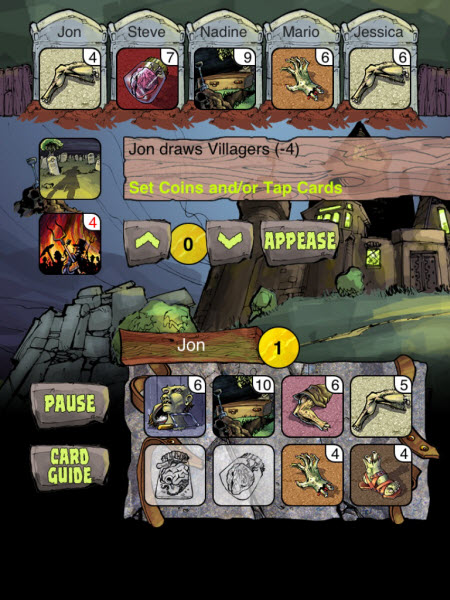
Pretty much all of the features of the original are included. Two to five players (any combination of human and computer) can play on one device. Networked (online) multiplayer will not be part of the initial release. Each computer player has a name, and there are subtle differences in play style. All the basics are there - buy, sell, auction, coffins, villagers - with an option for either Basic or Advanced rules.
Games can be paused, saved, and resumed at any time.

There is some animation, as well as sound effects and an orchestral score. Volume for music and effects can be adjusted independently. There is also an in-game manual, which shows the original rules, edited and re-written as appropriate.

Here's a screenshot:


As soon as it's on the app store, go buy it!

Saturday, January 30, 2010

Cardboard Games vs iPad Games: 7 Reasons Why Each Are Better

7 reasons why cardboard games are better than games on a tablet computer

Design Limitations

Any framework, no matter how robust, enforces design limitations. Companies will produce APIs for game design, piece handling, board creation, and so on, but no matter how grandiose, a designer will always be stuck in the thinking that the framework provides.

No one would have designed Mousetrap if games had to be on a flat board with pieces and cards.

To be fair, a limited framework can actually be beneficial to game designers, up to a certain point. By narrowing those things that are possible, you eliminate the overwhelmingly empty space that paralyzes decision-making. Otherwise, like Powerpoint for presentations, every game begins to look the same.

Changing the Game

The magical thing about games and play is that you can change rules, or give handicaps, whenever you want. Start the game without a pawn, add an extra row of spaces, or combine two games with jumping jack interludes. The point is the fun, and you control what you want.

A programmed game ensures that everyone, everywhere, plays by the same rules, which is great for worldwide competitions, but not great for creativity and spontaneity. Or for undoing a move.

Who Owns It?

As we all should already know, when it comes to digital products, it's no longer clear who owns the product. It's easy to trade or sell games. You own them; no one can revoke their license or erase them from your machine, and they won't disappear if you upgrade the computer.

Furthermore, you know that no one is tracking how many times you play, who wins, or what you do.

Speaking of Upgrades

With cardboard, the power, operating system, and so on can't crap out on you. They don't use electricity; in fact, every time I read a story about hurricanes or power outages, invariably it mentions families huddled together over candle light playing games. Battery life only lasts so long, and the same goes for compatible operating systems.

You Spent How Much?

You will probably save money in the long run if you buy many inexpensive games for your tablet, but the initial cost of owning a tablet is nothing to sneeze at. Cardboard and plastic are cheap. You can get a lot of games for $500, or even $100. And that doesn't include the cost of the games and hardware and software maintenance.

Resistance is Useful

Dexterity and skill games are not the same on a table, iPhone, or whatever, however prettily they simulate the effects. You can't gain marble-shooting skills without marbles.

Ooh, Shiny

While gadgets are cool, so are tactile pieces that stand up on a board. If you're going to spend $500, there are some awesome Chess sets that cost that much and are beautiful. And in two years, they'll still be worth $500 or more, whereas your virtual games won't be worth anything at all.

7 reasons why games on a tablet computer are better than cardboard games

Portable Game Library

One cardboard game is portable, but 1000 cardboard games are not. It's pretty cool to think of having the right game for any occasion in your game pocket.

No More Missing Pieces

A great number of games stop being played because the pieces go missing, or the board warps, or the rules get lost, ...

Infinite downloadability can be handy.

Computer Processing

Some of the best games take 6 hours to play simply because of the need to check charts, roll dice, calculate values, and so on. Figuring out all the paths on a board can take a lot of time; it would sure help if you could get the value of a route by hovering your mouse over your route.

Furthermore, you don't have to worry about messing up the rules or forgetting all of your options. Complex games often play in about a quarter of the time on a computer.

Of course, playing on a computer allows you to play with enhancements and features that you simply can't do offline. Terrain that changes, pieces with random abilities, timed effects, hidden properties, and so on.

Essentially, board and computer game hybrids. That's the cool stuff we've all seen in the promo videos.

Low Barrier to Publish

Getting a cardboard game to market is painstaking, time-consuming, and costly. You can spend upwards of $50,000 on print runs, and then still have to negotiate with distributors, retailers, artists, marketers, and so on.

Not all of these costs will disappear, but the Internet is famously a low barrier to game creation and distribution, which should equal a whole lot more designs making it to the public (and a whole lot of crap to sift through to find the good ones). Better yet, a game with a flaw can easily be patched.

Remote Players

As already proven, while nothing beats face-to-face gaming, it's nice to have the option of including remote players in a game session. A tablet game, reproducing the board in multiple locations, should make this possible.

Saved Game States

When you have 15 minutes to play, you're generally stuck with 15 minute games in the cardboard world. A tablet makes it easy to fold a game up to save for later.

Record Keeping

Detailed personal record keeping is automated on computer assisted games. Keeping records is not only an affectation, but an important element in thinking about how you "play against yourself" over time, rather than win or lose each game independently.

And, on the flip side of what I listed as a drawback for tablet games, when everyone plays by the same rules, worldwide record keeping, comparisons, and tournaments are possible, and you don't all have to travel to the same place to have them.

Monday, June 29, 2009

Got a New Laptop

Replaced the stolen laptop, and downloaded the only two computer games I play: Nethack and Igowin. Well, I also play Bridge online at BridgeBase, but I don't know if their Java client counts as a download. Oops: I also play Lexulous.

Wednesday, June 10, 2009

Why Don't Video Games Tell You the Rules?

An interesting thing about video games: many don't tell you all the rules.

I noticed this curiosity when a web game developer asked me to preview his online "board game". The game is played on a limited grid. The player gets five actions each turn to play, heal, or attack with his pieces. Between player turns, the enemy grows, does various things, and attacks back. The object is total annihilation: you or the enemy.

I've already told you more than I knew when starting the game.

There is a introduction screen with a start button and some theme, the usual fantasy elements, magic, etc. There is an options menu you can access from within the game that lists the controls and very simple ideas of what you can do: click to place this object. Click to attack with this object any enemy target within range. Click to heal your objects.

And that was it.

Anyone steeped in video game culture probably finds nothing wrong with this. OK, you say, I'll figure it out as I play. Let's just blast things already.

I had a different reaction. How many rounds in a typical game? How much damage does each item do, exactly? If it's random, what is the random factor? What's the range of each item? What rules govern how the enemy will play!?

In other words: I wanted to play a strategy board game. It looked like a strategy board game. But it played like a video game.

Video Games Don't Tell You the Rules

Video games think nothing of throwing you into the thick of the game. Just look at The Path which I played last week. The entire point of the game is to discover not just the items, not just the nature of how things work, but the very goals of the game. You don't know how fast you walk, you don't know what it means if it gets dark or if you run, or if you pick something up. Even after something happens, you don't know for sure that it will happen again. In essence, the point of the game is to discover the rules.

And once you discover the rules, there is little point left in playing the game.

Reason 1: Johnny Can't Read

I asked the web game developer why so little of the rules is given before starting the game. He said that video game players expect to just start the game and figure it out. No one wants to read a page of rules before playing a game.

I've heard that about board games. Publishers try to minimize the rules to make getting into the game as easy as possible. But even five minutes of rules explanation (enough to play Checkers, for instance) seems to be too much for today's video game player.

A lack of information doesn't leave room for deep strategy, only for educated guesswork.

After playing the game, I still didn't know exactly how many spaces I could shoot, nor how much damage I would do; I only knew that "this" item allowed me to to shoot "more", and "this other" item did "better" damage against "that" thing than against "the other" thing.

Reason 2: The Enemy is Us

In board games, players do all the management. I don't know for sure what card will be flipped up for the diseases in Pandemic, but I know how many cards there are, what the possibilities are, and exactly what happens when they do. Video games want to protect you from this information, so it seems.

On the one hand, that makes some military sense: you don't always know what your opponent is capable of in the middle of a war. Fog of war and all that. On the other hand, that's the only type of game it makes sense for: war games. If I can't evaluate what resources I get, how much the settlements cost, or what the victory conditions are, my game of Settlers of Catan may as well be a crap shoot. Forget any long term strategic planning or counting out exactly how many resources you need to build that city.

Reason 3: We Don't Need No Stinkin' Rules

I also think: many video game players don't care what the rules are, not really. They want to blast things.

There is no point in playing out a board game where the ending is a foregone conclusion. Any polite player will resign if the situation is hopeless. In well-designed games, the situation is never exactly hopeless until the game ends - at a set number of rounds or a set number of points.

I don't have too much experience with video game players, but the ones I know don't end the game when they've established that the game is a foregone conclusion. They keep blasting and cheering to the very end. The ones I know - admittedly teenage boys - purposely make themselves invincible with cheat codes so that the necessity of strategy and survival doesn't distract from the ultimate point of destruction.

Victory in this online board game was pretty much a foregone conclusion at mid-game. There was rally no need to mop up the remaining forces; nor mop up mine if I was losing, as I surely would have been on a more difficult setting. I get the fact that you can't easily program a video game to concede. But it didn't even occur to the designer to leave that part of the game out. Better and more thoughtful play isn't the point: total victory is.

Are there thoughtful video games, with explicit rules and goals, where the game is played, round by round, to calculated victory?

Monday, June 01, 2009

It's a Game, It's Not a Game, Whatever: It's Art

Last week I discovered The Path, an interactive piece of software developed by Tale of Tales. You navigate one of six young girls away from the short and easy path to her grandmother's house and into the woods to discover things and people, and her "personal wolf". Much of the onscreen activity comes from the software, rather than from any sort of direct control.

Is it a Game?

First things first: notice that I didn't say "game" in the above paragraph. Why not?

The home page of The Path describes the work as "a short horror game", and you are exhorted to buy the "game". Yet, on the About page of Tale of Tales, they claim that their purpose is
to create elegant and emotionally rich interactive entertainment. We explicitly want to cater to people who are not enchanted by most contemporary computer games, or who wouldn’t mind more variety in their gameplay experiences. For this purpose, all of our products feature innovative forms of interaction, engaging poetic narratives and simple controls.
Games are one type of interactive entertainment, but not the only type. The above paragraph is nearly devoid of the word "game", except insofar as their aim is to target people who play games with something different. Instead, they call their work "interactive entertainment", or "products" with "interaction", "narratives", and "controls".

Similarly, on the bottom of their site is a small About box, which reads
We make interactive projects that often take place in virtual spaces. Our motivation is mostly artistic. We want to discover and exploit the enormous expressive potential of realtime technology.
"Interactive projects", "realtime technology".

So what is The Path? Is it a game? Is it even entertainment? Is it an interactive experience?

The Problem with Calling This a Game

The problem with calling The Path a "game" is that people then evaluate it as a game.

As a game, it is perforce classified as entertainment and recreation. As a game, it is contrasted to other games with regards to fun, replayability, accessibility, decision-making, flow, strategy, excitement. These are yardsticks for evaluating games.

But it is evident that The Path is not meant to be most of these things. It is deliberately trying to tap other emotions other than fun, isn't concerned with replayability, provides more story than decisions, has no defined goal on which to hang strategy, and is meant to produce a very different type of excitement.

A great number of critics of The Path, lulled by the word "game" and the criteria as to which all games must perforce satisfy, see fit to criticize The Path as falling short in one or more of these criteria.

Other critics take issue with all designers of products such as these, claiming that people who design non-fun, non-replayable "games" should stop sullying the name of games, and stop looking to games to make artistic points. In their eyes, games can't make these points, because that's not what games do.

Maybe they are right. If you DEFINE quality in a game as fun, replayable, goal-oriented, flow, and so on, then these are not quality games. And one can never make a quality artistic game, because by definition, cognizance of art is and can never be more than an interruption in the flow of the drive to win. Beautiful graphics and lovely game play are by necessity lost within flow, strategy, and goal-orientation. Winning, as a goal, is antithetical to the concept of art, at a very core level. And so if a game requires you to win, any message irrelevant to winning can only detract from the game.

I have no issue with this. I don't like to argue about what "should" be the definition of "game". If that's your definition, then we just have to come up with another word for what projects like The Path are. Just be aware that others will argue that game could consist of interactive activities that are not necessarily goal-oriented or fun.

The confusion arises because this software is designed by a "game company" for a "game platform" and called a "game". But can only games can be created by game publishers or experienced on game platforms? You can watch movies on most game platforms, can't you?

Is it a Movie?

Rather than be held up to the standards of a game, what if we consider The Path a movie?

If you go into a movie expecting a game, you're bound to be disappointed. No controls! No goals! Movies, or more broadly theater, television, film, and other performance arts, have their own criteria for quality: visuals, sound, composition, acting, plot, theme, and so on.

How does The Path rate as a movie? Anyone?

No, It's Not Quite a Movie

You can fail to finish a movie, like you can fail to finish a game. A movie might present difficult to understand metaphors that are a challenge to understand. A game gives you challenges that you must overcome; however, these are typically overcome by discovering some spot on the board or control sequence, not through epiphany.

We expect movies to be non-interactive, and for good reason. Part of the art of movie making is pacing, narrative juxtapositions, specific shot angles, story arc, and so on. You could create an interactive movie that is simply a "choose your own adventure", where all of these are guaranteed regardless of what choices are made. But that's a very low level of interactivity.

Most games allow you to move forward and backward, in endless loops, angle screens from various directions, and fail to complete part of the narrative. Can that ever really produce a cogent work of art?

What is it?

What do we do with interactive entertainment that is not a "game" and not a "movie"? They appear to be more movie than game, if we burden game with all sorts of requirements that non-goal oriented activities, or even goal-oriented but non-win oriented activities don't have. We could simply call them interactive movies.

Interactive entertainment borrows from both games and movies. It's somewhat interesting that game developers, and not movie producers/directors, have been primarily the ones interested in making them, since conventional wisdom seems to think that they're more like movies than like games.

The reason for this is that even those dipping their toes into these waters so often labor under the illusion that they must include game trappings. There is still a feeling of having to throw in entertaining game play or the possibility of winning, or goals, or quests. None of this is truly necessary. But when they are not, what is there in its place? You have to fill the void with something gripping.

The Path

Reviews: fidgit, Slate, Brainy Gamer, Videogamer, IGN, neoSeeker, Eurogamer, Bit-Tech, Horror Style, Die Hard Gamer Fan (truly hates the game, and gives spoilers), Joystiq, Escapist, Pop Matters, GameZone, Indie Gamer, and many more.

I am not a video gamer. This is the first video game I've bought since Myst, a game I also didn't understand or complete. The only other video games I've played (since around 1990) are online board game implementations and Minesweeper.

That makes me a complete newbie with regards to video games. As a newbie, I am unused to devoting more than ten minutes to a single-player game - I devote an entire day to tabletop games, but usually a dozen different ones throughout the day, and interspersed with social and strategic interaction. The Path is puzzle.

I'm not into puzzles. I don't enjoy wandering around trying to find deliberately obscure clues and items; I enjoy trying to work out metaphors in movies, but only because there is no single right solution. In a puzzle game, there is usually only one right solution and no clues that you're even getting closer. And the solution is usually pressing the right key or crossing the right square, which is hardly deep; it's methodical.

I spent two hours wandering around in the game, discovering things, interacting with things, and collecting things. I admired the personalities of two of the girls, and suspect that there is a whole lot more to discover, but I couldn't be bothered to continue. Nearly all of the things I see in the above reviews are not things that I discovered myself; I wouldn't know they exist unless those who actually know video games and had the determination and hours of time to complete them neatly wrapped them up in an article for me to read in a few minutes.. Maybe I'll give it another go some other time.

That's where I have a problem: as a game, of course it's slow, ponderous, and not really rewarding. As a movie, it's slow, ponderous, and not really insightful over the first few hours. If the entire thing could be played in 2 hours AND I would be guaranteed to discover everything within that time, I would probably think that it was an amazing game. But The Path is obviously aimed at experienced video gamers who know what to expect. Not movie goers and what they expect.

For someone like me, whose never played a long game, I can't possibly devote 12 hours to it to get this experience. Give me a boiled down version of the game and I'll love it. Make it into a movie. If interactive games are going to be this long, they're not going to reach the public any time soon.

Further reading: see my articles on games and art, and games and winning.

Friday, March 13, 2009

Online Bridge

Game night was canceled this week owing to Purim and so much else going on. But I played a few hands of Bridge online at Bridgebase.com . First time on the site.

I used to play Bridge at OKBridge, and then Yahoo Games, and then MS Zone. I'm probably missing a few. Each place has it's own interface, it's own proportion of good to bad players, and annoying to polite players.

I don't know why I keep moving. Actually, I play wherever my brother/friends are playing at the moment, so it's more accurate to say that I don't know why they keep moving. Except for OKBridge, which stopped being free.

What's your favorite place to play mainstream card games like Bridge and Hearts?

Thursday, August 28, 2008

A Gamut of Video Games vs a Narrow Range of Board Games

Walk into a toy store like Toys-R-Us, or a general store like Walmart, and you'll find an entire gamut of video game genres but a narrow range of board games.

Board games, even "grown up games", are situated near the toys, the construction sets, and the paint kits. The available games are, for the most part, children's toys. The grown up games occupy a small shelf, and contain a few party games, some light conflict games like Risk and Stratego, maybe some Heroscape, and the old standbys such as Clue, Scrabble, and Monopoly.

Now walk over to the other side of the store where they sell the video games. It's cordoned off behind metal detectors and glass cases. They sell multi-hundred dollar consoles and twenty, forty, or sixty dollar CDs.

A huge wall of dark guns, swords, soldiers, blood, and horror are at eye-level, stretching in either direction. The peripheries reveal civ building titles such as Tycoons and Sims, empire builders, "girls" games, casual bundles, board and card games, sports games, racing games, dance and music games, and so on, just to name a few.

There are hundreds and hundreds of titles in dozens of genres. A great many contain themes and images that would render a board or card game unpresentable in the store. Imagine a board game filled with guns and bloody images, or scantily clad women and men! Shocking! Yet, these immersive and interactive video games have all this and worse, and are on display.

Video games with complicated pieces and rules are available; they require the most dedicated play and hours or days to learn the rules. Board games like this exist, but you won't find a game that takes more than three minutes to learn in the store. Or twenty minutes to play, if certain publishers get their way. Sports board games, racing board games, ecological board games, financial board games, and all sorts of other board games exist and are loved an played by those who know about them. You won't find them in these stores, either.

Why not?

I hear it's because parent buy games for their kids, and parents aren't going to buy games they don't know. Well, that's certainly not true for video games. Kids come in and buy them all by themselves. It's certainly not true that people aren't playing games about sports, horror, racing, dancing, and other themes. There they are in the video game aisles, and they sell, too. Wouldn't they sell in the board game aisles?

It's a vicious circle. People who want to play good games go to the video game aisles, because that's where the good games are. The store managers don't want to stock newer and better board games, because they think the kids nowadays are into video games. Kids don't play board games anymore. Well of course they don't, if you won't stock any good ones.

If they won't play board games, why are board game sales rising steadily for the last fifteen years, despite you? Why are there millions of visitors to Boardgamegeek every month? Why are so many fantastic games being produced every year, many of which sell thousands, or hundreds of thousands of copies around the world?

Yehuda